Tru North Tru Life Solutions


Role
Product Designer
Scope
Health software website, Landing Page
Duration
August 2025 - February 2026
Overview
Joining a fast-paced startup as the sole UI/UX designer, I led the end-to-end design for a centralized health platform. Working alongside an engineering team with an active backend, I established the product's design direction—mapping high-stress user flows, designing a multi-variable data engine across 35+ trackers, and building a scalable design system.
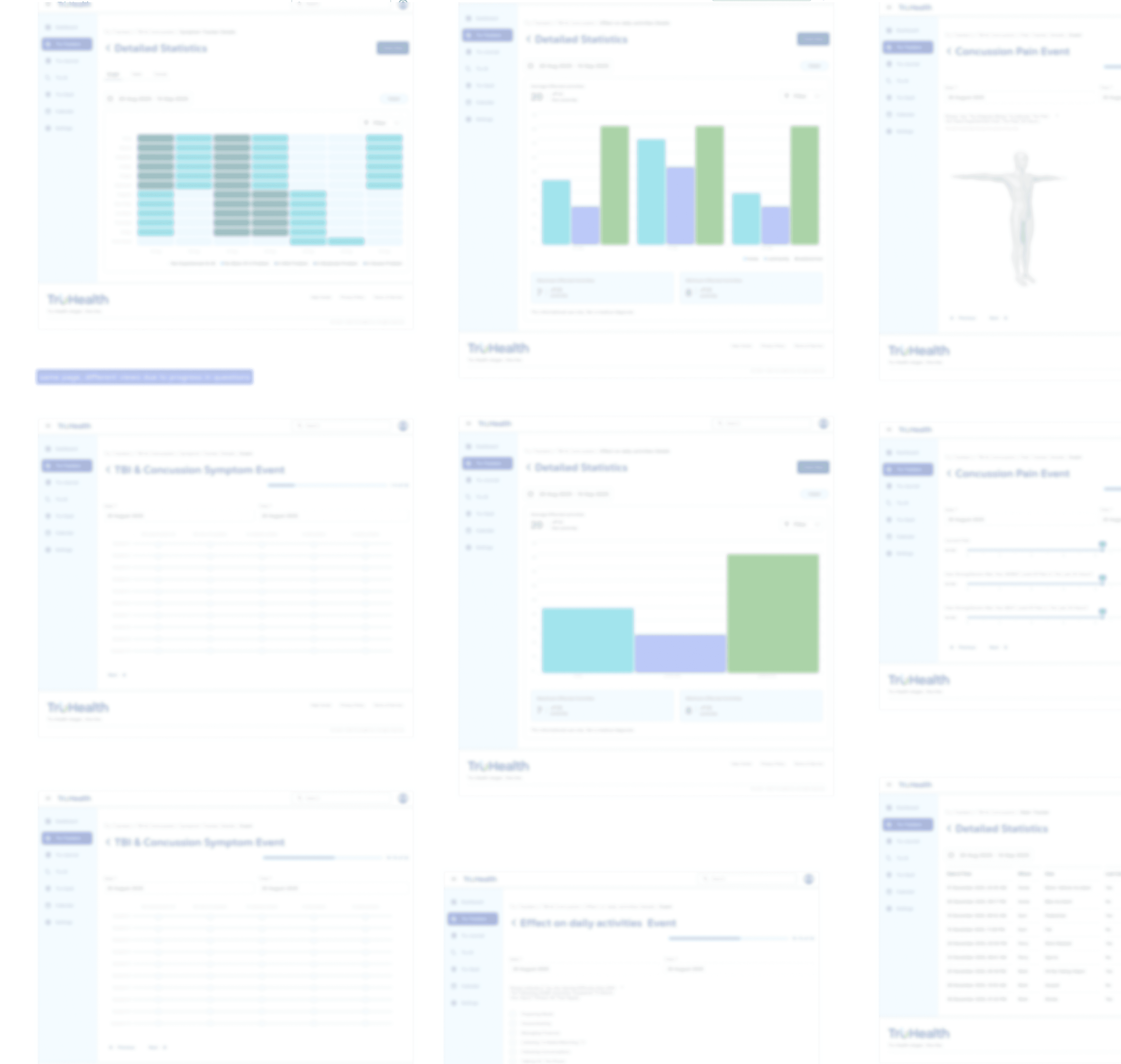
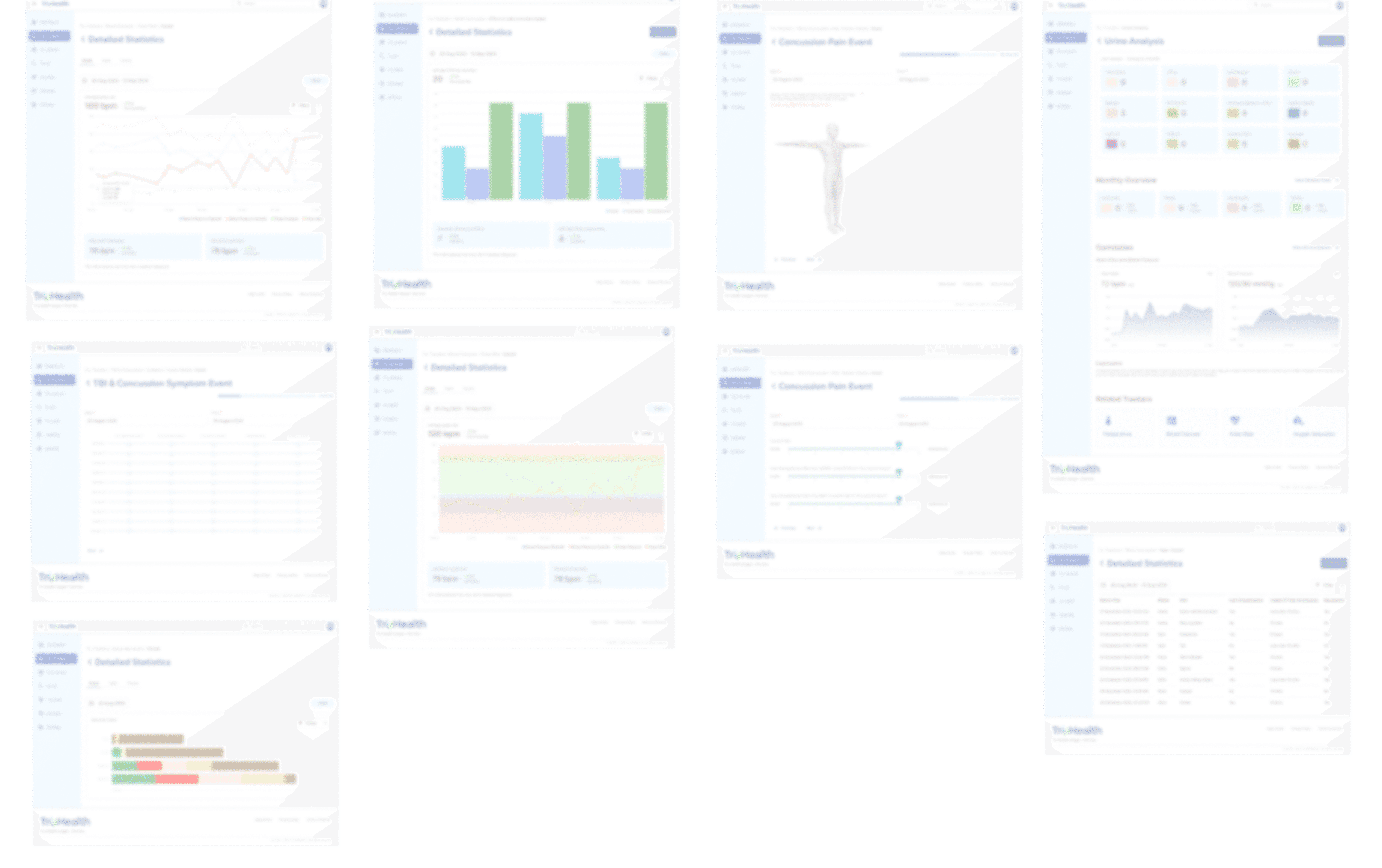
Key Design Decisions & Strategy
DECISION 1
Standardized chart frameworks ensure rapid clinical analysis and intuitive data logging.
Designed a modular visualization system (line graphs, heat maps, bar charts, and filterable tables) to support 35+ tracking variables—enabling patients and clinicians to spot abnormal trends in seconds.

DECISION 2
Prioritizing core UI templates over repetitive screens cut production time in half.
Pivoted from rendering 100+ individual screens to a component-first strategy: delivering pixel-perfect templates for unique flows alongside wireframe blueprints for repetitive tracker layouts.


DECISION 3
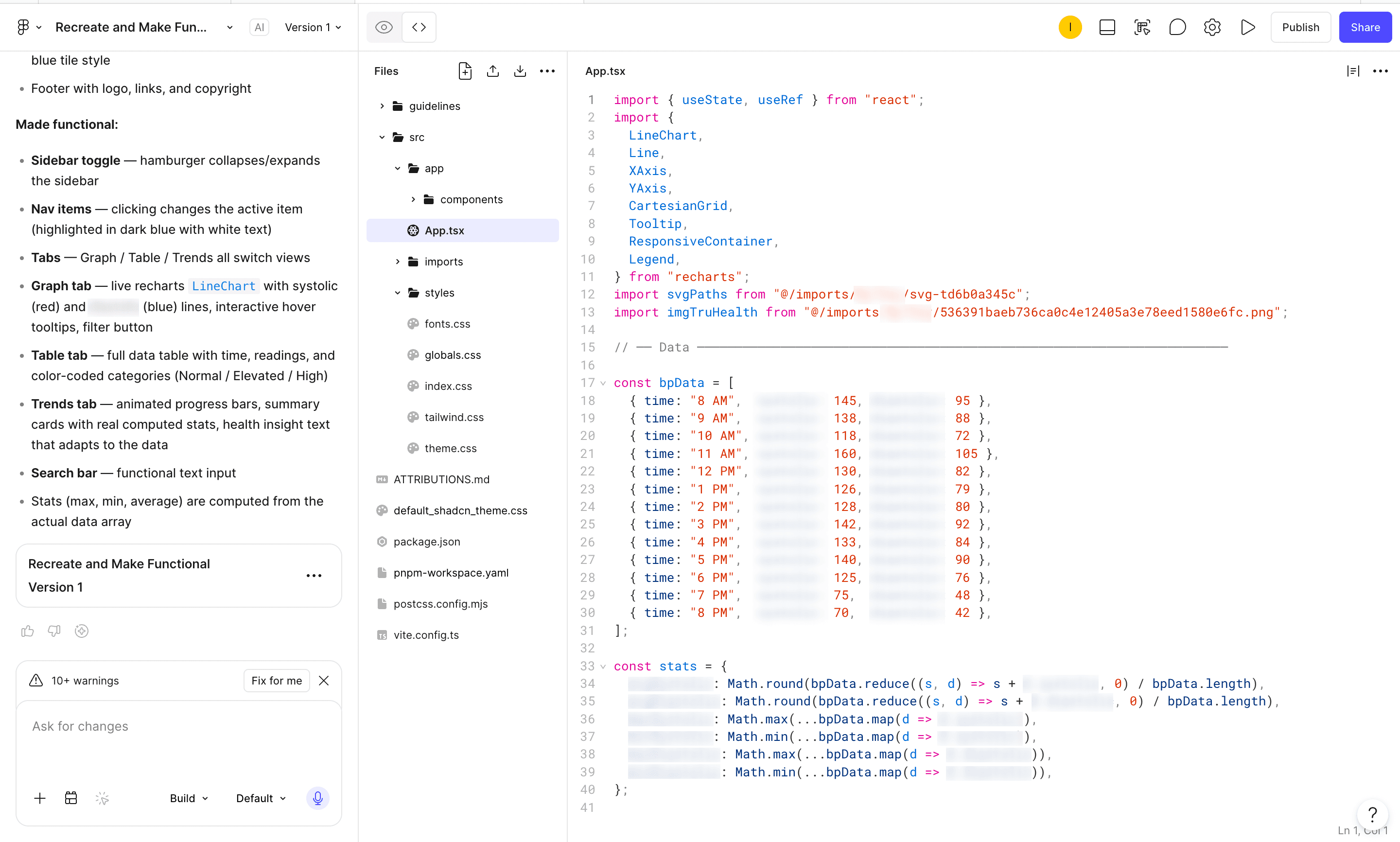
Leveraging Figma AI and LLMs bridged design-to-development execution.
Used Figma AI to generate interactive component variants and edge-case UI states rapidly.
Extracted functional HTML/CSS via Figma Make and Claude to help engineers connect pre-built backends to frontend UI faster.
Stakeholder Negotiation & Challenges
1.
Evidence-Based Design Reviews
Navigated subjective feedback by presenting research-backed visual options to demonstrate how specific UX choices drove business goals.
2.
Adapting to Evolving Backends
Built modular, state-flexible components that absorbed backend updates without structural overhauls.
Learning Outcomes
Successful solo product design requires balancing founder vision with user advocacy through clear visual negotiation.
Build Visual Anchors Early
Don't wait for perfect documentation. Use quick visual wireframes to uncover hidden priorities and drive team consensus faster.
Leverage AI to Bridge the Dev Gap
Tools like Figma AI and Claude create a shared language with engineering—speeding up implementation through interactive states and clean code snippets.
Advocate with Artifacts, Not Opinions
When stakeholder preferences conflict with UX best practices, present research-backed visual options to demonstrate how specific design choices drive business goals.
Design for Backend Fluidity
When engineering capabilities are evolving in parallel, build modular UI components that can easily adapt to backend changes without requiring complete redesigns.